Featured Article
Substack · Product Launch
A step klosr to common-sense spatial intelligence — Reconstructed ground shade and camera-derived sidewalk occupancy become condition costs on Manhattan's walk graph, making physical street trade-offs visible before a walk begins.
Read on Substack → ·
Request early access
Company
The company works on the evidence gap between complex physical environments and the records available when people make decisions. Each project starts with a concrete representation problem. It then publishes a paper or public module that exposes the boundary of the evidence.
How the work is built
aimez builds tools from research so a product can sit on evidence that can be inspected. Closed lab records become folders a collaborator can open. A disk gate decides what may enter a result.
klosr is a Manhattan evidence model.
klosr ·
orcast ·
wavves
klosr, current product
Beta / testflight · pilot-stage commercial workflow
klosr is a Manhattan evidence model. Sparse observations fuse onto a walk graph and validated evidence layers combine into a route objective. Campaign placement reads the same representation. Coverage is the island walk graph under the published camera and model layers, not a global city claim.
Comfort-aware routing is one application on that representation. Alternate cost encodings read the same evidence layers so shade-seeking and crowd-avoiding routes can be compared on equal footing. Each narrated value carries a provenance label marked live or deferred.
A pedestrian camera network samples every 30 minutes and builds a detailed record of street conditions. The record is always of conditions 30 minutes ago. When the 08:00 cycle closes, it contains what the cameras observed from 07:30 to 08:00. A decision depending on conditions at 08:30 has nothing measured to consult. Field-JEPA is an experiment on forecasting the next crowding field from the measured cycle without waiting for the next cycle to close.
Application hosts remain in limited access while the public release prepares, so the public surface below is the Field-JEPA holdout timelapse. Research notes stay secondary while the release prepares. The pilot is designed for small campaign teams and independent storefront operators.
Field-JEPA forecast ·
Neighborhood access research (archive)
orcast
orcast forecasts Southern Resident killer whale encounters in the Salish Sea from sparse sightings. A kernel intensity model reports confidence only where held-out evaluation supports it. The research workbench covers biologging-driven 3D reenactment and hydrophone views, with a public launch planned for this summer.
Application hosts remain in limited access until that release, so the public module embedded below is the Orca Strike interaction surface.
orcast forecast and traces
Research archive
orcast whitepaper 1 (PDF) ·
orcast whitepaper 2 (PDF)
wavves
wavves supports durable multi-agent routing so long-running sessions continue from recorded files instead of chat memory. Lanes advance only after a disk gate capture records a pass or block verdict. Public proof for the wavves host is repaired on a separate track and is not cited here as a working visitor surface.
Projects
The Field-JEPA research panel for klosr and the Orca Strike module for orcast remain available here while their full application hosts stay in limited access.
klosr · Field-JEPA
Forecasting the crowding field
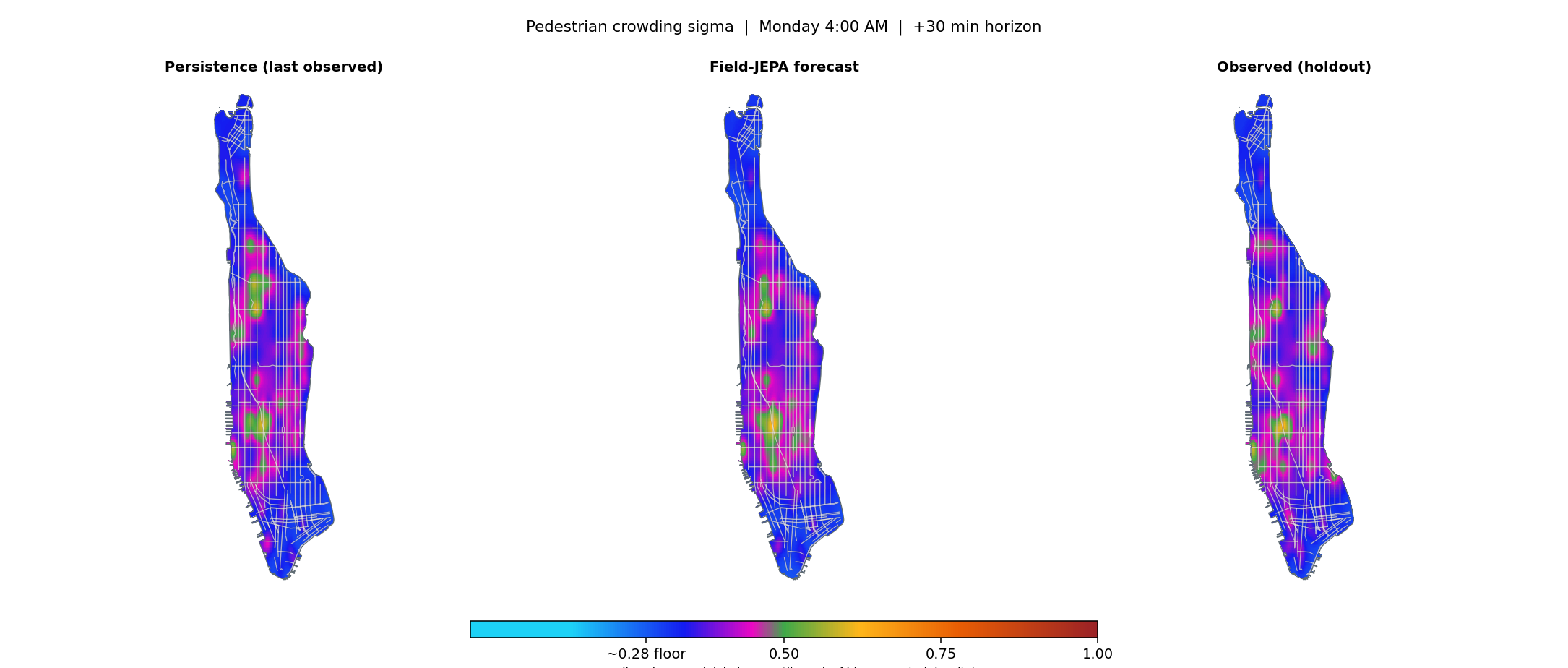
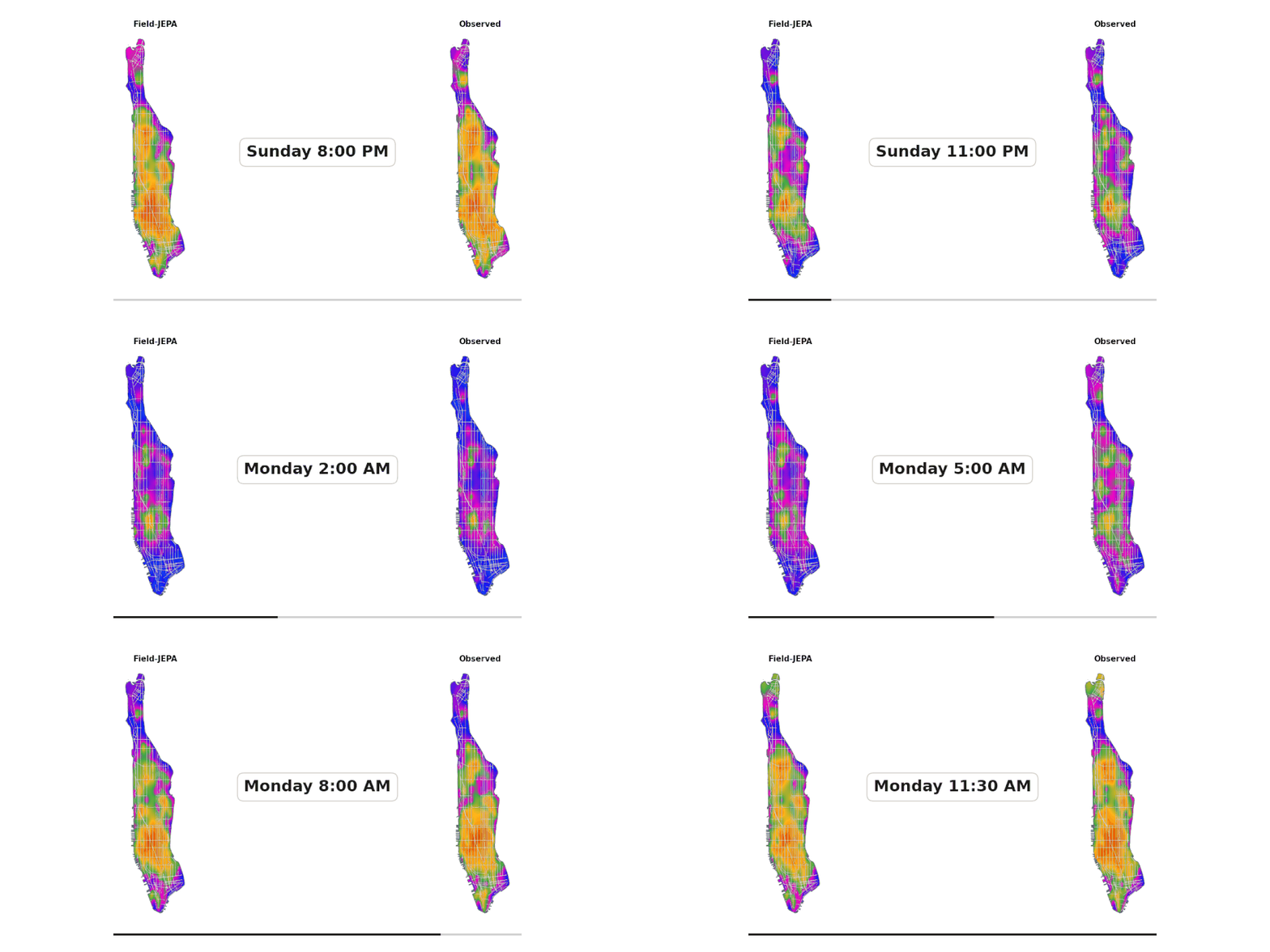
Holdout-day timelapse places continuous Field-JEPA forecasts beside observed crowding-sigma flowfields for the same cycle. Local time ticks between the panels. Color encodes crowding sigma as a percentile rank of bias-corrected density inside a validated operating region.
On the full-island B cohort (339 cameras), Field-JEPA reaches 0.090 MAE at +30 minutes against a persistence bar of 0.105, a 14.2% reduction on a single held-out day (2026-06-29). The sigma field predicted here is a research result on klosr’s crowding evidence layer, not a deployed routing feature.
Persistence sits beside Field-JEPA and the observed crowding sigma at +30 minutes as a continuous shoreline-clipped flowfield for a single holdout cycle. Persistence carries the last observed field. Field-JEPA shows the forecast. The holdout panel shows what was observed.
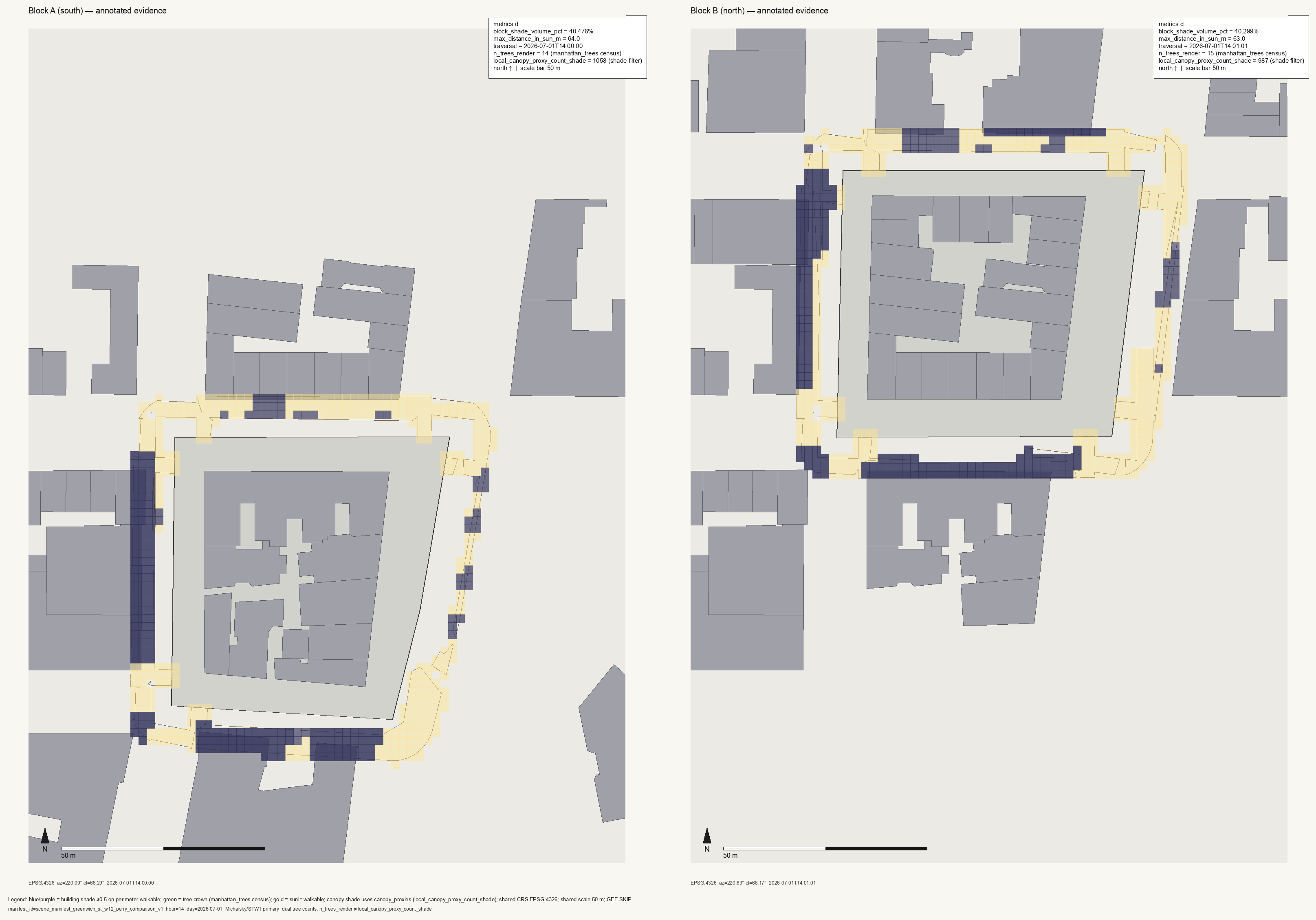
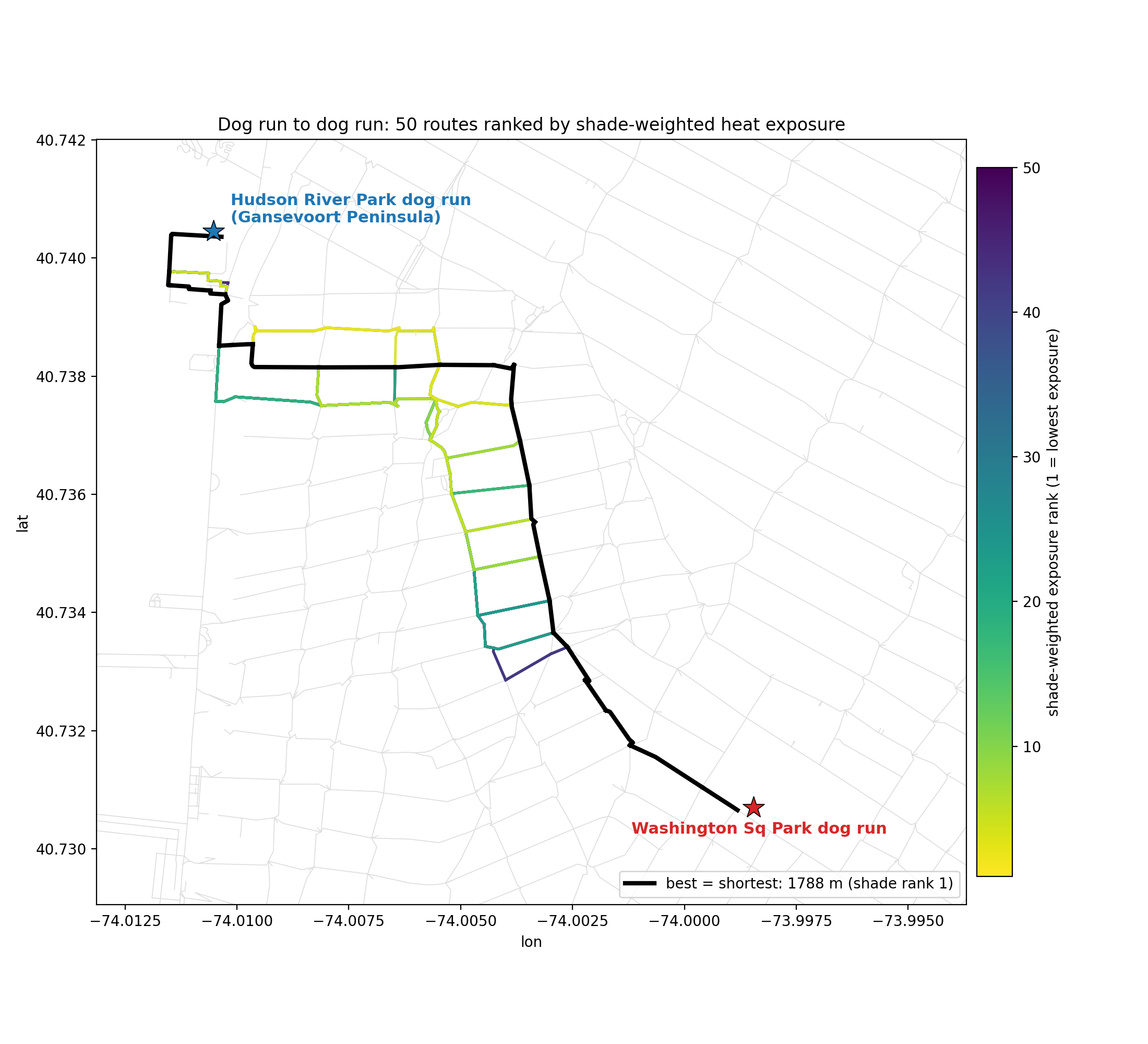
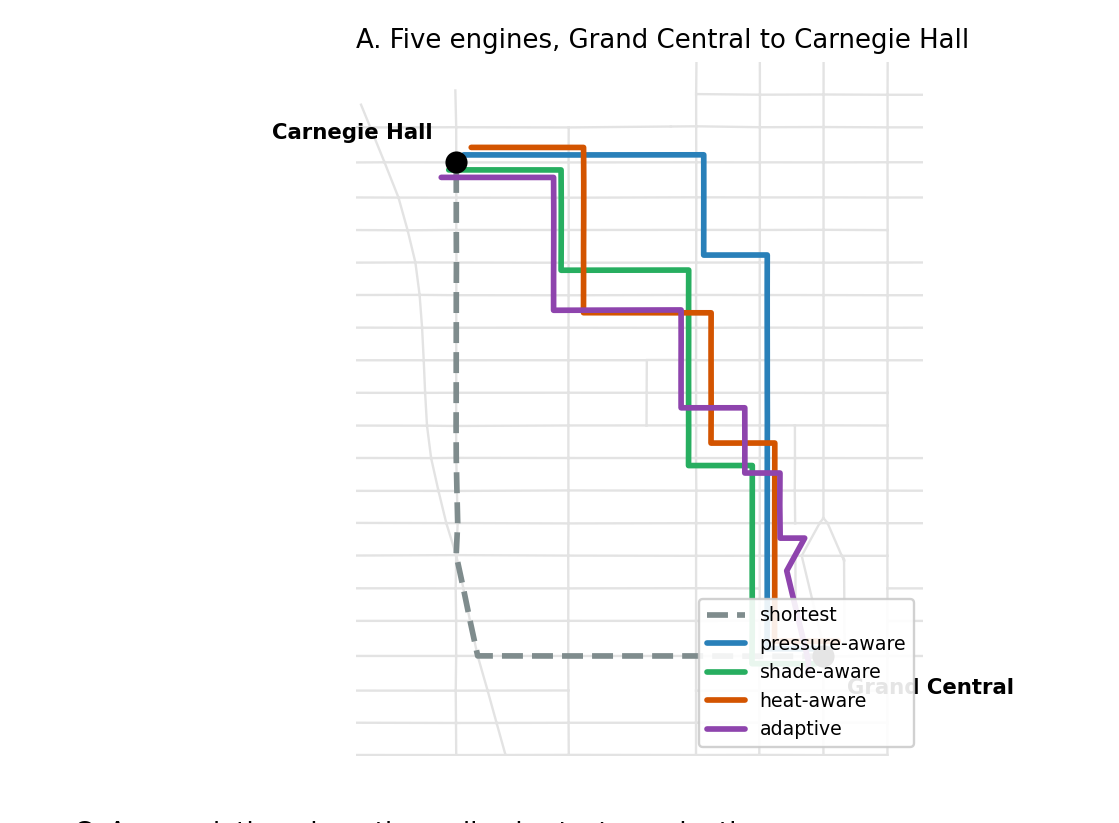
Route overviews for two origin-destination pairs show the Village dog-run corridor and Midtown Grand Central to Carnegie Hall, with field-validated shade comparison scenes kept in the research pack as modeled shade and surface temperature on the street surface.
Fork-metric cards that carried calibration constants were removed from the public surface, while the aggregate Field-JEPA evaluation numbers above remain as research results.
klosr overview
orcast · Orca Strike
Kernel-intensity, gate-bounded encounter forecast
Loading Orca Strike…
Embedded demo panel · branded hold state
Orca Strike did not load in this panel.
The embed stayed blank or timed out. Open the module directly instead of waiting on an empty frame.
Open Orca Strike in a new tab
Reconstruction and replay module on the encounter-forecast workbench. Sparse Salish Sea sightings feed the forecast. Confidence is shown only where held-out gates pass.
Held-out deviance skill −0.018, 3 of 5 folds, effective confidence 0%, one Haro Strait hydrophone ~7.5 months. Research/pilot, not a deployed encounter product.
orcast overview ·
orcast whitepaper 1 (PDF) ·
orcast whitepaper 2 (PDF) ·
Open Orca Strike in a new tab
Research outputs
City evidence models
Manhattan is the pilot evidence model for pedestrian conditions on a walk graph. Camera-measured crowding cycles sit beside modeled shade and other evidence layers. Field-JEPA adds a predicted crowding layer beside the current-cycle measured field.
Physical-world evidence
orcast publishes encounter forecasts for wildlife observation data, with Orca Strike as the current public interaction surface.
Managed distributed sessions
Developer tooling work studies moderator-led agent sessions with explicit handoffs and check records for long-running research work.
Contact and updates
Research updates
Occasional notes cover demos and public artifacts from the aimez research program.
Join research updates
Collaboration and outreach
Use this channel for project inquiries and research collaboration.
Start a conversation
Broader diagnostic-infrastructure concepts in the research program are the subject of a filed U.S. provisional patent application, while the public materials on this page are a research demonstration under that pending filing.
Terms ·
Privacy ·
O0 SMS opt-in