 aimezaimez
aimez studies measured fields on pedestrian graphs: camera-derived stress and open-data capacity assign route cost to directed edges. The Midtown corridor is the first test surface for route behavior, loop residuals, and basis checks. Start with the slide decks: executive summary · canonical figures.
Local edge values change route cost. The stronger question is whether they also produce graph-level structure visible only through loops, residuals, and changes of basis on the same fixed graph.
The Manhattan Midtown pedestrian graph holds the graph fixed while the field on its edges varies. Claims stay at the level of route comparisons and proposed loop tests, not a general theory of urban atmosphere.
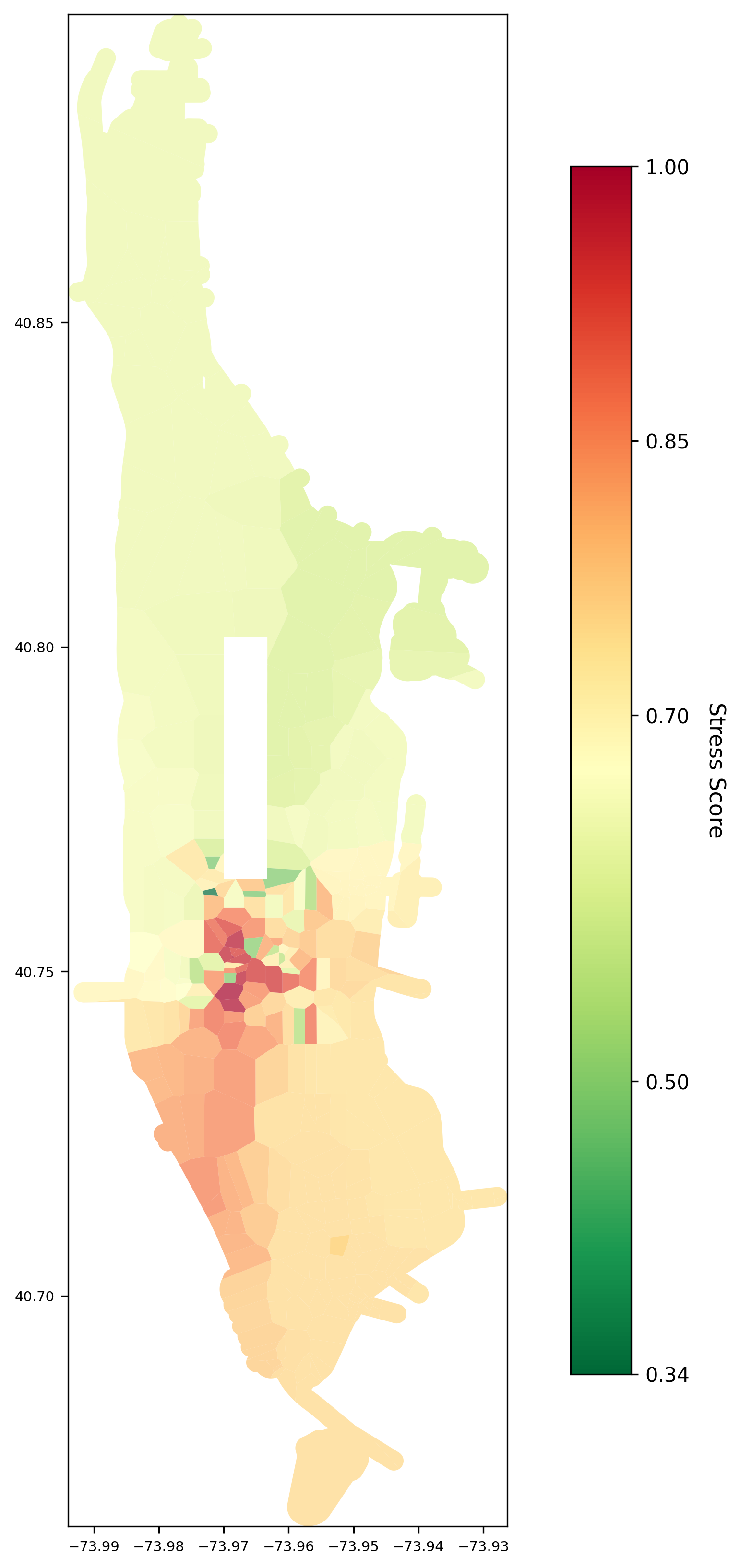
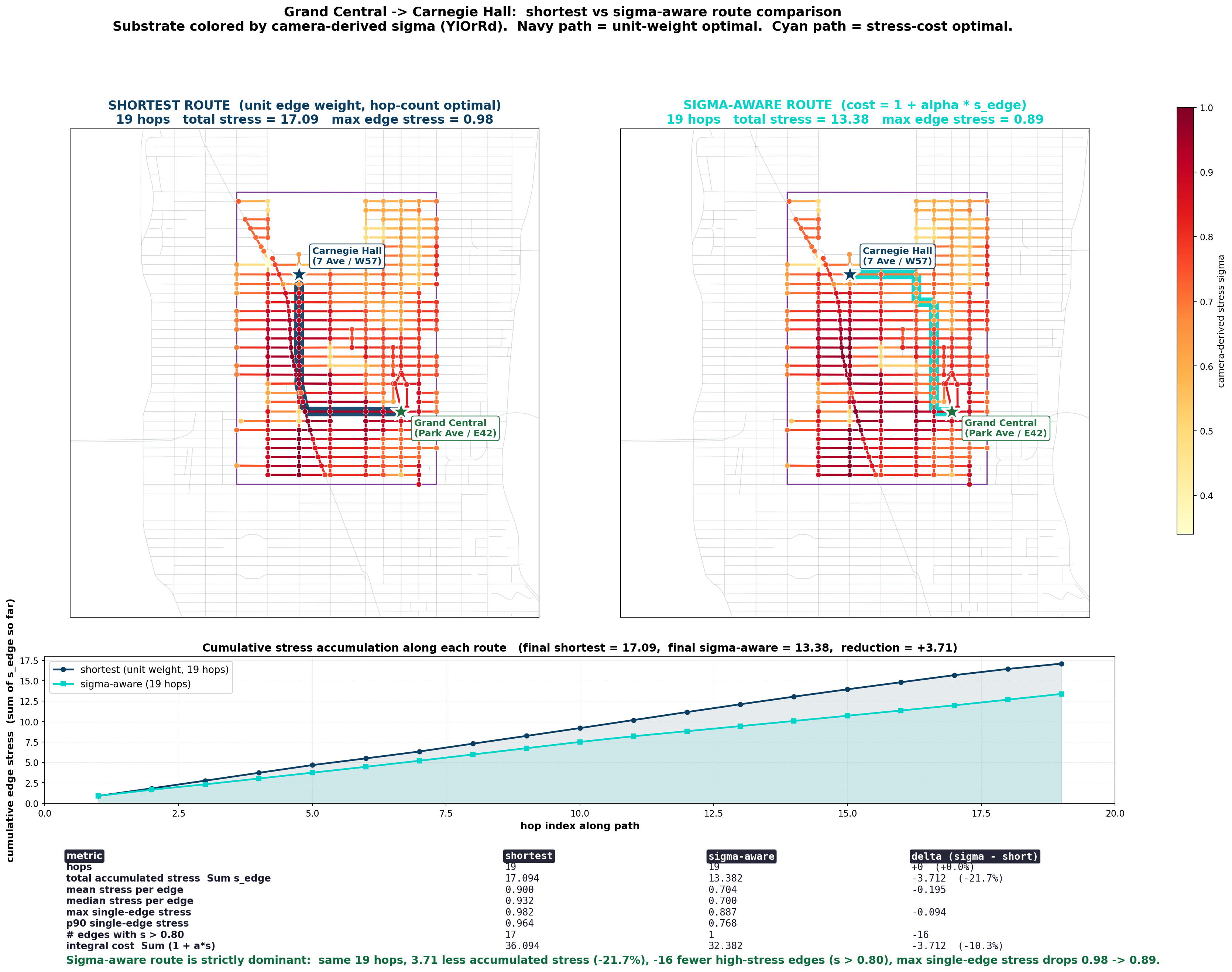
Paths, loops, and residuals name tests on the modeled graph—not a claim that Manhattan’s fundamental group has been computed. A route is a path-like trace; a closed walk asks whether local costs cancel or leave a residual; basis checks ask whether patterns persist under an equivalent loop organization.
Topology vocabulary formulates probes. It does not replace empirical validation or claim city-wide invariants. Loop-closure results remain work in progress.